Vault
The Collector of all things lost to human memory.
VaultNothing is ever truly forgotten, so long as I am here to remember.
Background
This deity resides in Its own pocket dimension—a void surrounded by glowing nebulas, with piles, shelves, and boxes of various objects, like a divine warehouse in the middle of The Great Structure. It collects trinkets and items from the mortal world, but with a catch: It can only claim things that are long forgotten, items no living mortal remembers. A mortal could catch the interest of this entity, using Its blind spot as leverage, as the deity would be happy to bargain for something It would not ordinarily be able to obtain. No takebacks—unless there’s a trade, of course.
Physical Appearance
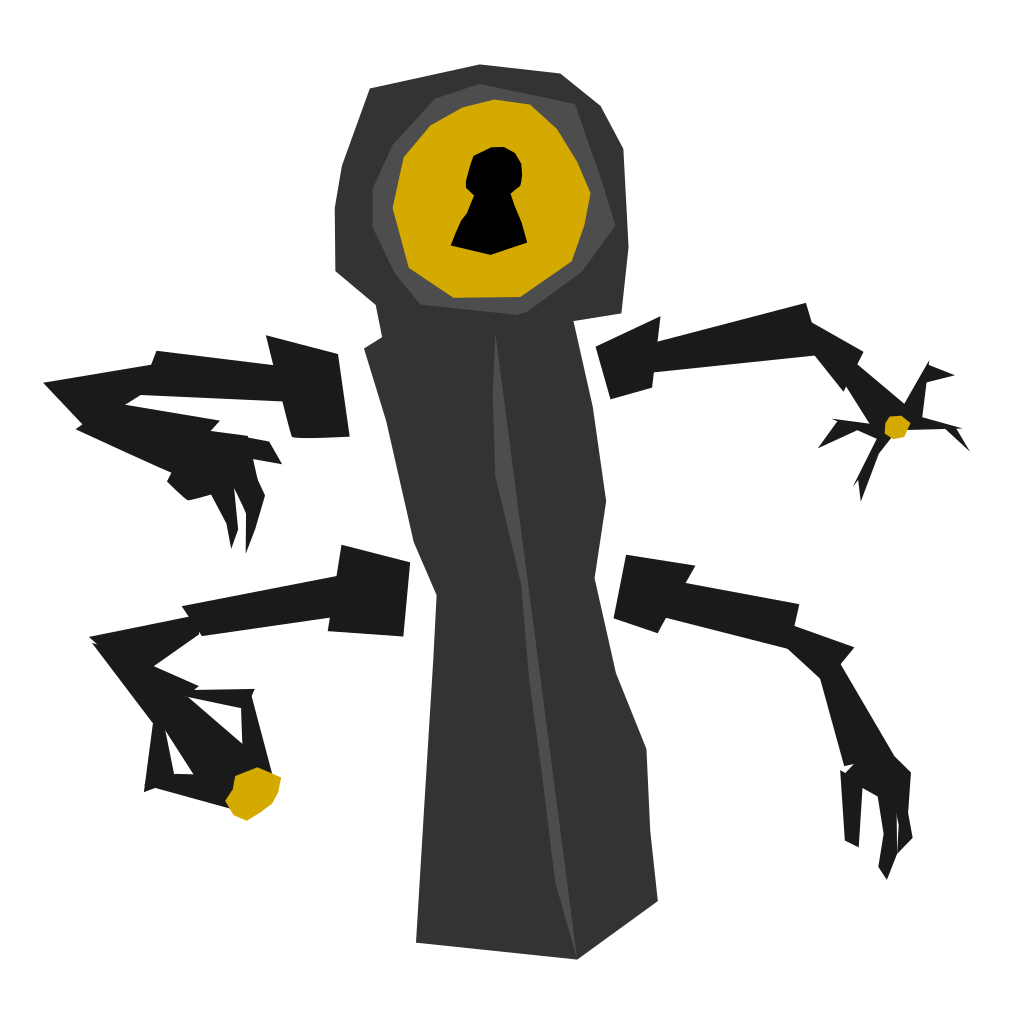
Vault is a slender figure, draped in a dark gray cloak that obscures any physical characteristics the deity may have. Under the hood, there is only a golden keyhole where a face would be. Surrounding It are four mechanical arms, each equipped with a different tool, used to sort, catalog, and maintain the countless items It has collected over the eons. The deity glides through Its domain, the only sound heard being the mechanical arms clicking and whirring.
Skills and Abilities
-
Divine Nature: Vault is a deity, and as such, It possesses the following traits:
- Immortality: Deities are ageless and cannot die of natural causes. While a deity can be greatly harmed, recovery is guarenteed. The only true way to be rid of a deity for an extended period of time is for them to be
[REDACTED]. - Nigh-Omnipotence: Deities are capable of bending reality to their will, allowing them to accomplish practically anything they could want to achieve, with the only exceptions to this being the laws of The Great Structure. However, most deities tend to only use their powers to achieve things within their domain, as overstepping their bounds can lead to conflict with other deities or the mortal world.
- Clairvoyance: Deities can see and hear everything that happens in the mortal world, though they may choose to ignore it. Cursing their names, however, will draw their attention, and it is rare that a deity is not offended by such actions.
- Immortality: Deities are ageless and cannot die of natural causes. While a deity can be greatly harmed, recovery is guarenteed. The only true way to be rid of a deity for an extended period of time is for them to be
-
The Embodiment of Collecting: Vault, being the personification of the concept of collecting, has various powers and abilities directly tied to Itself and Its domain:
- Archive of Oblivion: Vault can sense and retrieve any object in the mortal world that has been entirely forgotten by all living humans. Once claimed, they are protected and catalogued for eternity—unless a deal can be struck.
- The Universe’s Lost and Found: Within Its pocket dimension lies a boundless maze of shifting shelves, cabinets, and containers. While Vault can retrieve and catalogue anything within this space, It is not limited to just physical objects. It can also store memories, emotions, and even concepts that have been lost to time. With a place of such vast size, intruders are unlikely to find their way out, even if they manage to enter and steal what they’re looking for without a proper deal.
- Dimensional Reach: Vault can open rifts between any world and Its own pocket dimension, allowing It to transport items, beings, Itself, or even entire locations. Their keyhole is a permanent portal to Its domain, though It may not be willing to let anyone through.
- Bargaining Power: Vault loves to barter with mortals, able to strike deals that are beneficial to both parties. It can offer items or knowledge in exchange for something of equal or greater value by Its own view, but It will never give up something It has claimed without a trade.
- Archive of Oblivion: Vault can sense and retrieve any object in the mortal world that has been entirely forgotten by all living humans. Once claimed, they are protected and catalogued for eternity—unless a deal can be struck.
Trivia
- The concept for Vault was thought of by essentially making a living version of a Bag of Holding, a common trope in fantasy and RPG games.